Showing posts with label photos. Show all posts
Georgien-Kalender 2017

Eine Auswahl von 13 Bildern aus den folgenden:
ausbelichtet auf Canon HD-Fotopapier matt, 40x30cm
34,80 € inkl. Versand in Deutschland


Alle Bilder: Sönke Henning Tappe 

If you like this please Link Back to this article...


Photos from Abkhazia

Four Lithuanian students from the Vilnius University, studying politics and journalism, who are doing exchange program with the Tbilisi State University, traveled to Abkhazia in late November. 

--> civil georgia

If you like this please Link Back to this article...


Park Bulvar Mall, Baku

Park Bulvar Mall, Baku

Park Bulvar Mall, opened in 2010, hosts cinema, planetarium, various restaurants, about a hundred shops, bowling, kids playground and a currency exchange office on six floors and 17.000 square meters. 
Das Park Bulvar Shopping Center, eröffnet 2010, beherbergt Kino, Planetarium, verschiedene Restaurants und Cafés, etwa hundert Läden, Kegelbahn, Kinder-Spielplatz und eine Wechselstube auf sechs Etagen und 17.000 qm. 

You can find the mall at the promenade. The address is:
Das Shopping Center befindet sich an der Promenade. Die Adresse ist:
ТРЦ "Парк Бульвар"
Neftçilər Prospekti
Baku AZ1001, Azerbaijan
(8)12 598 80 80

On the homepage of Park Bulvar Mall you can find a directory of shops as well as a galery with pictures of the building.
Auf der Internetseite der Park Bulvar Mall gibt es ein Verzeichnis der verschiedenen Läden sowie eine Galerie mit Bildern des Gebäudes.


You can find more pictures of Park Bulvar Mall as well as many other pictures of modern Baku architecture at:
Hier gibt es mehr Bilder des Park Bulvar Shopping Centers sowie viele weitere Bilder moderner Architektur in Baku:

Park Bulvar Mall, Baku


If you like this please Link Back to this article...


Waiting for the bus / Warten auf den Bus (Aserbaidschan / Azerbaijan)


Bus-Station near Sangachal, Azerbaijan
Bushaltestelle nahe Sangatschal, Aserbaijan

August 2010

If you like this please Link Back to this article...


Batumi / ბათუმი

Batumi, eine kleine Großstadt von 120.000 Einwohnern, liegt an den Stränden des Schwarzen Meeres unweit der türkischen Grenze. Die erste Siedlung wurde vermutlich bereits im Zeitalter der griechischen Kolonisation gegründet. Dem griechisch-römischen Einfluss verdankt die Stadt ihren schachbrettartigen Grundriss.


House in Batumi / Haus in Batumi, Republic of Georgia, originally uploaded by Henning(i).

Typisch für die in der Nähe des Meeres gelegenen Straßenzüge sind die weiß gestrichenen Häuser. Die teilweise mondäne Architektur erinnert an das alte Seebad im Zarenreich.


Hier klingen georgische Architekturformen an:


Batumi - Typische Straße / Typical street in Batumi, Republic of Georgia, originally uploaded by Henning(i).

Ein wunderbares Beispiel der Nouveau Art:


BATUMI, originally uploaded by batumi.
Ein altes Kaufhaus, in stark reparaturbedürftigem Zustand:


103_0332, originally uploaded by inthisspace.

Die zwei bedeutendsten Wirtschaftszweige sind der Hafen und der Tourismus.


Seit mehr als hundert Jahren ist Batumi Seehafen für den Erdölexport. Das Öl gelangt traditionell per Pipeline oder Bahn aus Baku und wird hier, vor der Verschiffung, raffineriert. Mit der Errichtung des Terminals Supsa und der Baku-Ceyhan-Pipeline verliert der Ölhafen Batumi aber langsam an Bedeutung.

Die Promenade von Batumi bietet einen schönen Ausblick auf den Hafen:


Die Winter sind regnerisch, im Januar fällt durchschnittlich an zwanzig Tagen Regen. Selbst im Sommer will er manchmal gar nicht wieder aufhören. Das erklärt die breiten, metallenen Stiege, die von den Bürgersteigen auf die Straße hinabführen. Doch nicht selten sind die Pfützen so breit, dass sich kaum eine Stelle findet, um die Straße trockenen Fußes überqueren zu können.


Batumi, originally uploaded by AudreyH.

Doch zurück zur Promenade. Zur Hauptferienzeit, im August, quillt Batumi schier über. Traditionell verbringen Georgier die Ferienzeit dort, wo sich Abkühlung finden lässt: Am Meer oder in den Bergen. Junge Leute zieht es vor allem nach Batumi und Kobuleti nicht zuletzt wegen des Nachtlebens.


Batumi wurde unlängst um eine Touristen-Attraktion reicher - das neue Riesenrad:


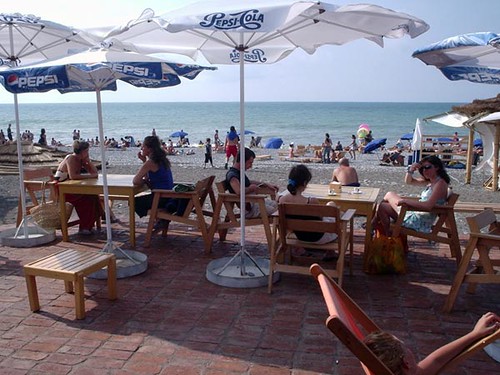
Tagsüber lässt es sich am besten in einem der vielen Strandcafés aushalten:


Batumi beach 2005, originally uploaded by Man with no name.


Abends locken solche Strandhütten, die an die Südsee erinnern, zahlungswillige Touristen an:


Batumi Boulevard Bungalo, originally uploaded by Oxera.


Wie man hier sieht, ist der Strand im August nicht selten überfüllt.


2Beach batumi, originally uploaded by Man with no name.


Aber Batumi hat noch mehr zu bieten:
Eine Universität (sowie mehrere Hochschulen)...


The University at night., originally uploaded by Rob@SFU.

und das Theater:


Batumi Theater, originally uploaded by joan_arnedo.


Der botanische Garten gehört zu den bereits vor über hundert Jahren angelegten Hauptattraktionen Batumis:


Botanical Garden Californian Palm section In Georgia Batumi, originally uploaded by Man with no name.

Außerdem gibt es Museen - u.a. das landeskundliche Museum mit seiner Antikensammlung und das Kunstmuseum (u.a. mit einigen Bildern von Pirosmani) - sowie ein Meerwasseraquarium, ein Planetarium (das hoffentlich bald wieder öffnet) und einen Tenniscourt (nahezu direkt am Strand).

Und auch, wenn man ihn mittlerweile längst auch anderswo kaufen kann - nirgendwo, so erzählen nicht nur Einheimische, schmeckt der "Adjaruli" (Chatschapuri) so gut wie in Batumi:


P7310098.JPG, originally uploaded by Stere0.

Seit der Rosenrevolution und dem Sturz Aslan Abaschidses hat sich das Verhältnis zwischen der Autonomen Republik Adscharien und der Zentralregierung in Tbilissi wieder entspannt. Früher musste man als Reisender unangenehme Pass- und zuweilen auch Gepäckkontrollen über sich ergehen lassen.
Adscharien gehörte eigentlich seit alterher zu Georgien, geriet aber schon im 11. Jahrhundert unter den Einfluss der Seldschuken, später der Mongolen. 1635 wurde es Teil des Osmanischen Reichs. Es wurde erst 1878 in Folge des Berliner Kongresses Teil des Zarenreichs, wobei der wichtige Schwarzmeerhafen ausschlaggebende Rolle besaß. Abgesehen von einer kurzen Interimsperiode (Brest-Litowsk, Eroberung Batumis durch die Türken 1918, Besetzung durch britische Truppen) blieb es unter russischer bzw., ab 1921, unter sowjetischer Kontrolle bis zur Unabhängigkeit Georgiens.
Der Autonomiestatus war höchstwahrscheinlich von Moskau gewollt, um Tbilissi die Kontrolle über den Hafen entziehen zu können. Hierin unterschied sich die sowjetische nicht von der zaristischen Zentralmacht. Denn während die georgische-orthodoxe Kirche in Adscharien unter BEIDEN Regimen diskriminiert und schikaniert wurde, wurden islamische Glaubensgemeinschaften von Moskau unterstützt. (Bekanntlich definieren sich Georgier insbesondere über ihre Sprache und ihre georgisch-orthodoxe Religionszugehörigkeit!)
So nimmt es nicht weiter wunder, dass es in kommunistischer Zeit nicht eine einzige funktionierende georg.-orthodoxe Kirche in Batumi gab, wohl aber eine Moschee.


Auch diese große Kirche, einst von katholischen deutschen Siedlern gegründet und mitten im Stadtzentrum gelegen, wurde für profane Zwecke benutzt. Nach dem Zerfall der Sowjetunion wurde sie zu einem georgisch-orthodoxen Gotteshaus.


CRW_2664, originally uploaded by a.phasia.

Abseits der Touristenpfade, d.h. in den Hinterhöfen und Vororten, zeigt sich Batumi eher ärmlich. Daran haben auch die knapp 10 Jahre, die zwischen den nächsten beiden Bildern liegen, kaum etwas geändert.


Batumi - Hinterhof / Batumi - Backyard, Republic of Georgia, originally uploaded by Henning(i).

Das alte Intourist ist nicht mehr erste Haus am Platz...


Hotel Intourist Batumi, originally uploaded by Garrett2.


und dieses ehemalige Hotel wird, wie das ehem. Hotel Iveria in 2005 in Tbilissi, weiterhin von Flüchtlingen bewohnt.


Es wird allerdings überall gebaut. Über Baustile und Geschmäcker lässt sich allerdings streiten... (Vergleiche den Titel, den der Fotograf dem Bild gab!)


... neuerdings gern auch farbenfroh (vielleicht als Entschädigung für die monotone Struktur?):


Batumi, originally uploaded by Rapho (georgien.blogspot.com).

Die Immobilienpreise sind, wie auch in Tbilissi, erheblich angezogen in den letzten Jahren.


Ich verabschiede mich mit einem stimmungsvollen Bild aus 1999, das wie ich denke noch einmal zeigt, dass es in Batumi auch abseits von Strand und Hafen einige schöne Ecken zu entdecken gibt.


If you like this please Link Back to this article...


Zvartnots, Armenia


From the official guide on the premises:
The great cathedral ... referred to as both Zvartnots and St. Grigor Lusavorich by medieval historians, was built on the spot where it is said Grigor Lusavorich met King T’rdat, initiating the king´s conversion and leading to Armenia adopting Christianity as the sate religion (the first nation to do so, in 301).
The name is attributed to a vision Grigor Lusavorich had when establishing the Armenian Church, and has been variously translated as “Vigilant Ones”, “Vigilant Forces”, “Archangels” and “Celestial Beings”. The name may as well derive from the pre-Christian word “Zvarnonk”, given to a spirit believed to raise the dead, though this is not proved.
Inspired by an interpretation of the Apocalypse that predicted the second coming of Christ when the seven main churches of Christianity came together, Zvartnots was built to be the “seventh seal of the seventh tier of God’s presence on earth” (Revelation 11:15-19 of the Holy Bible). One of the tallest churches on earth when it was built, Zvartnots was the most significant architectural development in the Byzantine world.
Its architecture had a direct impact on the dome of St. Sophia in Constaninople, which collapsed in 558. The master architect for Zvartnots is said to have been commissioned to design St. Sophia’s dome using the tubular arch system developed at Zvartnots.


If you like this please Link Back to this article...


Fernsehturm Tbilissi / TV-Tower Tbilisi

If you like this please Link Back to this article...


Svaneti in summer / Swanetien im Sommer


If you like this please Link Back to this article...


Mestia (vintage look)


If you like this please Link Back to this article...


Zwei Ordenträger / Two people decorated with Soviet medals


(Azerbaijan, near Baku / Aserbaidschan, nicht weit von Baku)


(Tbilisi bazaar /Basar von Tbilissi)

Pictures taken in summer 2010 with:
Sony a850 + Minolta 85mm f1.4 GD, ISO200 + f2.2

If you like this please Link Back to this article...


Restoration and Reconstruction of Old Tbilisi / Renovierung und Umbau der Tbilissier Altstadt


"THE part of Tbilisi is both enchanting and dismal. Its winding, cobbled streets, tilting houses and laced wooden balconies have a delightful, gingerbread charm; but decades of official neglect, widespread poverty and an earthquake in 2002 have taken a heavy toll. With one-fifth of the housing here categorised as slum-like, the need for restoration is urgent.Yet regeneration attempts have proved controversial. During Tbilisi’s credit-fuelled housing boom, some residents feared ruthless property developers would replace swathes of the town with gleaming office blocks. A law designed to preserve architectural heritage was enacted in 2007. But the large number of officially designated monuments, the limited availability of official funds and the commercial incentives of developers still make for hard choices.In 2008 the housing bubble burst, following the financial crisis and Georgia’s short war with Russia. This created new problems. Tbilisi’s construction industry, a major local employer, was decimated, property developers had around $700m of unfinished buildings on their books, and banks were saddled with toxic debt.In response, last year Giorgi Ugulava, the city's mayor, launched the “New Life for Old Tbilisi” scheme...."Continue reading at The Economist


Some pictures of old and new Tbilisi center (summer 2010):


New "Bridge of Peace" with Sololaki district and castle Narikhala
(Funny, this bridge even has a facebook-page!)


Rebuilt SAS. Radison hotel, former hotel Iveria, once full of refugees. (Compare with 2oo5!)


Restored houses between Narikhala and sulfur baths, tourist sight


Restaurant Kala, near Leselize Str. (tourist area with tourist prices)


Restoration is going on in Agmashenebeli str. (center east of Mtkvari).
Public financing covers facades only, though.


Agmashenebeli Str., yet unrestored


as above


Sololaki, near Puris moidani (traditional neighborhood)


as above


as above


Little side-street of Leselidze str.


as above


backyard, somewhere "behind" the parliament


backyard near patriate's seat, not far from patriarchate


backyard, Agmashenebeli str.


Backyard in the very center, the Tavis Suplebis Moidani (Freedom square)


near Saarbrückener Platz


One of the many (!) new multi-storeyed appartement blocks


Depressing architecture: Most inhabitants of Tbilisi live in one of the countless Soviet style buildings made with precast concrete slabs. (These here can be found next to the zoo.)


As you can see, public spending faces a dilemma: The historic old town consumes a lot of funding. First because an important part of the cultural heritage needs preservation, second because a picturesque old town attracts tourists. On the other hand side allocating the funding to the Soviet style apartment blocks (last picture) would certainly iniure to the benefit of many more people. (Mostly those who live in deprived suburbs anyway.)
Problem is that most apartments are private. Everybody cares as much as possible for their own apartments, while stair-cases, lifts and the entrance areas are in poor, sometimes very poor conditions. The rise of a certain "public spirit", caring about one's neighborhood etc., is still desperately needed.


If you like this please Link Back to this article...