Showing posts with label Altstadt. Show all posts

Old Tbilisi (2017)

Some pictures from old Tbilissi, #3-8 from Awlabari. Old Tbilissi is dying in areas that tourists don't visit. It's so sad.


All pictures: © Sönke Henning Tappe


If you like this please Link Back to this article...


Restoration and Reconstruction of Old Tbilisi / Renovierung und Umbau der Tbilissier Altstadt


"THE part of Tbilisi is both enchanting and dismal. Its winding, cobbled streets, tilting houses and laced wooden balconies have a delightful, gingerbread charm; but decades of official neglect, widespread poverty and an earthquake in 2002 have taken a heavy toll. With one-fifth of the housing here categorised as slum-like, the need for restoration is urgent.Yet regeneration attempts have proved controversial. During Tbilisi’s credit-fuelled housing boom, some residents feared ruthless property developers would replace swathes of the town with gleaming office blocks. A law designed to preserve architectural heritage was enacted in 2007. But the large number of officially designated monuments, the limited availability of official funds and the commercial incentives of developers still make for hard choices.In 2008 the housing bubble burst, following the financial crisis and Georgia’s short war with Russia. This created new problems. Tbilisi’s construction industry, a major local employer, was decimated, property developers had around $700m of unfinished buildings on their books, and banks were saddled with toxic debt.In response, last year Giorgi Ugulava, the city's mayor, launched the “New Life for Old Tbilisi” scheme...."Continue reading at The Economist


Some pictures of old and new Tbilisi center (summer 2010):


New "Bridge of Peace" with Sololaki district and castle Narikhala
(Funny, this bridge even has a facebook-page!)


Rebuilt SAS. Radison hotel, former hotel Iveria, once full of refugees. (Compare with 2oo5!)


Restored houses between Narikhala and sulfur baths, tourist sight


Restaurant Kala, near Leselize Str. (tourist area with tourist prices)


Restoration is going on in Agmashenebeli str. (center east of Mtkvari).
Public financing covers facades only, though.


Agmashenebeli Str., yet unrestored


as above


Sololaki, near Puris moidani (traditional neighborhood)


as above


as above


Little side-street of Leselidze str.


as above


backyard, somewhere "behind" the parliament


backyard near patriate's seat, not far from patriarchate


backyard, Agmashenebeli str.


Backyard in the very center, the Tavis Suplebis Moidani (Freedom square)


near Saarbrückener Platz


One of the many (!) new multi-storeyed appartement blocks


Depressing architecture: Most inhabitants of Tbilisi live in one of the countless Soviet style buildings made with precast concrete slabs. (These here can be found next to the zoo.)


As you can see, public spending faces a dilemma: The historic old town consumes a lot of funding. First because an important part of the cultural heritage needs preservation, second because a picturesque old town attracts tourists. On the other hand side allocating the funding to the Soviet style apartment blocks (last picture) would certainly iniure to the benefit of many more people. (Mostly those who live in deprived suburbs anyway.)
Problem is that most apartments are private. Everybody cares as much as possible for their own apartments, while stair-cases, lifts and the entrance areas are in poor, sometimes very poor conditions. The rise of a certain "public spirit", caring about one's neighborhood etc., is still desperately needed.


If you like this please Link Back to this article...


Tbilissi backyards / Tbilissier Hinterhöfe


If you like this please Link Back to this article...


Painting Old Tbilisi


If you like this please Link Back to this article...


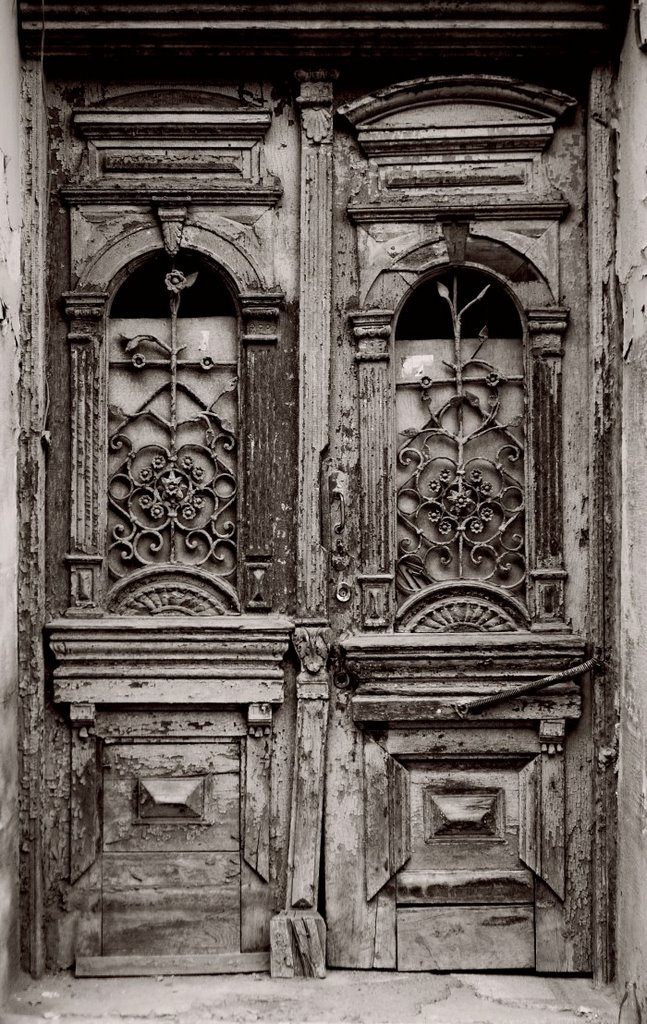
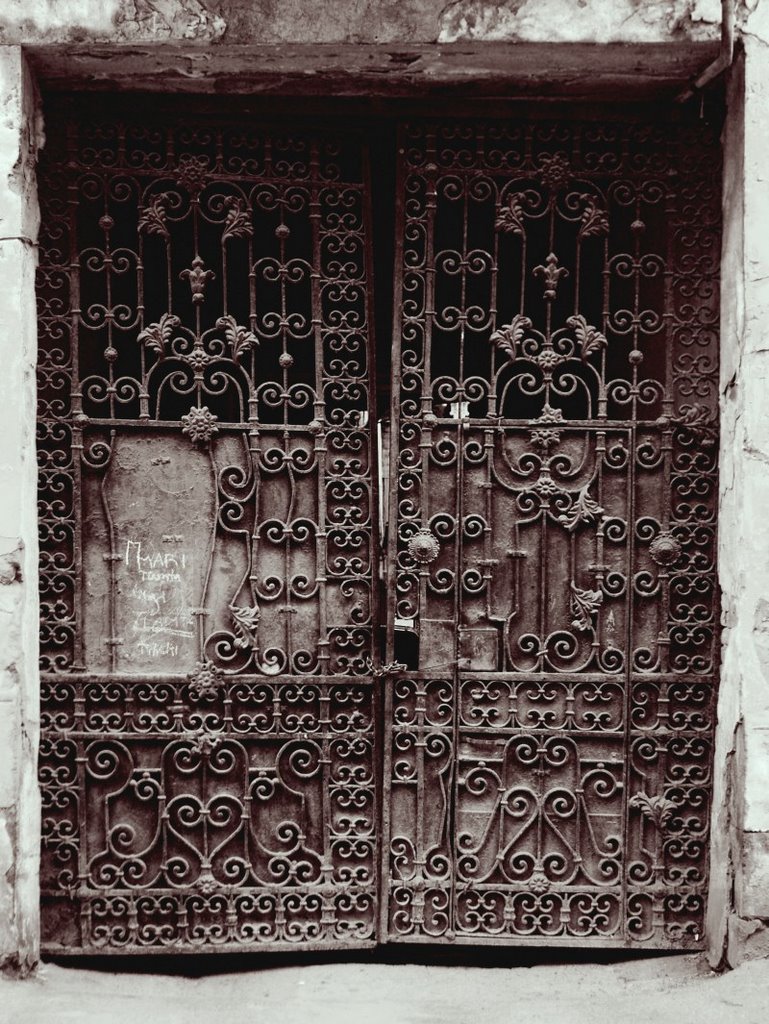
Haustüren / Frontdoors in Sololaki, Tbilissi


What a shame I haven´t posted for such a long time...
Schande über mich, dass ich so lange nichts mehr eingestellt habe...

I found these doors in Sololaki district, Tbilissi, not far from Tawissuplebis moidani. Actually, I have already published a post titled "morbid beauties", but for these old beauties the above titles would be more than adequate, too. The shots were taken on my most recent tour to Georgia in summer 2005.
Watch out - there´s more to come!

Diese Türen habe ich im Stadtteil Sololaki, Tbilissi, aufgenommen, nicht weit vom Tawissuplebis Moidani. Ein früherer Post trägt schon die Überschrift "Morbide Schönheiten" - würde dieser Titel nicht auch hier passen? Diese Fotos stammen aus der Serie vom Sommer 2005, meinem letzten Besuch in Georgien.
Fortsetzung folgt!


If you like this please Link Back to this article...


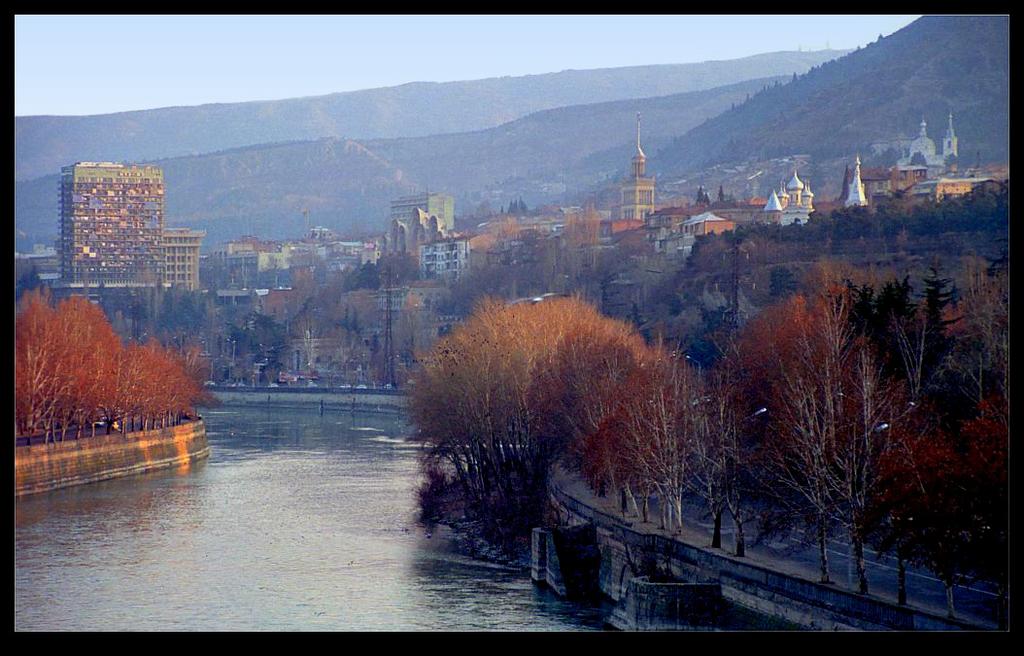
Tbilisi / Tbilissi seen from the north


This picture dates back from 1997. On the left hand side of the (russ.) riv. Kura or (georg.) Mtkwari you see the former hotel Iveria, still full of refugees from Abchasia and South Ossetia (two secessionist regions, where gruelsome civil wars had taken place between 1991 and 1993). The building is empty now, in fact only the concrete levels remain today. It was bought by "silkroad group" (i.e. British Petroleum) and will become a hotel again.
A little left from the center of the picture you find round arches of concrete. This was the former tribune for the communist elite inspecting military parades on May 1 and November 7, popularly called "The ears of the KGB".
Then, on the right side, with the characteristic "onion"-shape, there´s the largest russian church to be found in Tbilisi.
Three buildings, three episodes in history: Ruled by Russia from 1801 to 1918, a soviet republic from 1921 to 1991 and the struggles after independence.

The next post will give you closer looks at these 3 buildings.
Dieses Bild stammt von 1997. Auf der linken Seite der (russ.) Kura bzw. des (georg.) Mtkwari ist das ehemalige Hotel Iveria zu sehen, hier noch voll belegt mit Flüchtlingen aus den Bürgerkriegen (1991-1993) um die sezessionistischen Regionen Abchasien und Süd-Ossetien . Das Gebäude ist heute bis auf die reinen Betonträger und -böden entkernt. Es wurde von der "Seidenstraßen- Gruppe" (dahinter steckt British Petroleum) gekauft und soll wieder Hotel werden. Weiter rechts, mit den runden Bögen, die Tribüne, von der die kommunistische Nomenklatura die Paraden zum 1. Mai und 7. November abgenommen hat. Sie wurde im Volksmund "Ohren des KGB" genannt.
Auf der rechten Seite, mit den charakteristischen Zwiebeltürmen, die größte der russischen Kirchen in Tbilissi.
Drei Gebäude, drei Episoden der georgischen Geschichte: Die Zugehörigkeit zum Zarenreich seit 1801, georgische Sowjetrepublik und die Wirren der postsowjetischen Ära.
Im nächsten Artikel werde ich genauere Aufnahmen von den drei Gebäuden zeigen.

Im Deutschen existieren zwei Namen für die Hauptstadt Georgiens: Tbilissi und Tiflis. Der letztere stammt aus dem Russischen. Georgier benutzen die erste Form. Was das Wort bedeutet, werde ich in einem weiteren Beitrag erzählen.

If you like this please Link Back to this article...